10 Mar 2026 · 5 min read
Why is my radiator cold at the top or bottom? Common causes and fixes
By Carlton Fuller · Founder & Master Gas Engineer, 30 years' experience
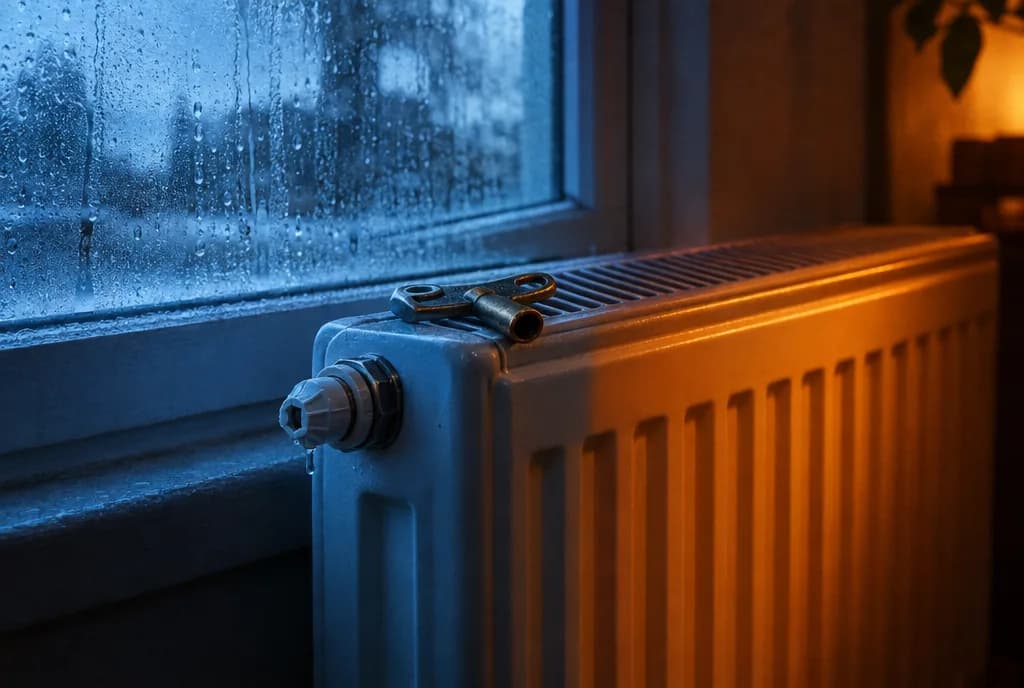
A radiator that is cold in one spot while the rest of your heating works fine is one of the most common calls we take. The two main causes - trapped air and sludge - are usually easy to tell apart by where the cold patch is.
Cold at the top - trapped air
If the top of your radiator is cold but the bottom is warm, you almost certainly have trapped air in the system. Air gets in when the system loses pressure, is refilled, or during installation. It rises to the top of each radiator and prevents hot water from circulating to that section.
- ◆Turn off your heating and let the radiators cool for at least 30 minutes
- ◆Find the bleed valve - a square or slotted plug at the top corner of the radiator
- ◆Use a bleed key and turn it anticlockwise - you will hear a hiss as air escapes
- ◆Close the valve as soon as water starts to drip - do not leave it open
- ◆Check your boiler pressure gauge afterwards - it may have dropped and need topping up to 1 to 1.5 bar
Cold at the bottom - sludge
If the bottom of your radiator is cold but the top is warm, the likely cause is a build-up of rust and debris - commonly called sludge or magnetite - that has settled at the base of the radiator. This is common in older heating systems that have never had a chemical cleanse.
- ◆Short-term: you can try turning the system off, disconnecting the radiator and flushing it manually - though this is messy
- ◆Medium-term: adding a central heating inhibitor will slow further build-up
- ◆Long-term fix: a power flush of the whole system removes sludge from all radiators and the boiler heat exchanger
When to call an engineer
If bleeding and pressure checks do not fix a cold-at-the-top radiator, or if multiple radiators are cold at the bottom, you may have a more serious circulation problem - a failing pump, a stuck zone valve, or a blocked heat exchanger. These require a Gas Safe engineer.
Preventing it from coming back
Fitting a magnetic filter to your boiler protects against sludge and is now a standard fit on any responsible boiler installation. Most boiler warranties require one. If you do not have one, ask us when we next visit.
Need a Gas Safe engineer to diagnose your heating? We cover Surrey and South London.
Book an engineerFrequently asked
How much does a power flush cost in Surrey?
A power flush for a typical 10-radiator system in Surrey costs between £300 and £500 depending on system size and condition. We can quote after a brief diagnostic visit.
Do I need to bleed radiators every year?
Not necessarily every year, but any time a radiator is warm at the bottom and cold at the top. It is good practice to check after the system is drained or refilled.
Can sludge damage my boiler?
Yes. Sludge circulating through the boiler can damage the heat exchanger and pump over time, leading to expensive repairs. Fitting a magnetic filter is the single best preventative measure.
Related guides
Need a Gas Safe engineer?
Call 07956 876156 or request a callback - we cover South London and Surrey.