22 Sept 2026 · 8 min read
Vaillant Heat Exchanger Replacement Cost
By Carlton Fuller · Founder & Master Gas Engineer, 30 years' experience
TL;DR
A Vaillant heat exchanger replacement typically costs £450 to £750 fitted, and takes half a day to a full day because the casing, burner and fan have to come out first. Warning signs include kettling noises, a lazy yellow flame, rising gas bills and heating or hot water that cuts out. We stripped one down and rebuilt it this week - the photos below show exactly what the job involves. On a boiler over 12 to 15 years old, weigh the repair against a new one instead.
A Vaillant heat exchanger replacement typically costs £450 to £750 including parts and labour, more on newer condensing models where the primary heat exchanger is a sealed aluminium block rather than a simple copper coil. Labour alone usually takes half a day, because the burner, fan and most of the wiring loom have to come out first.
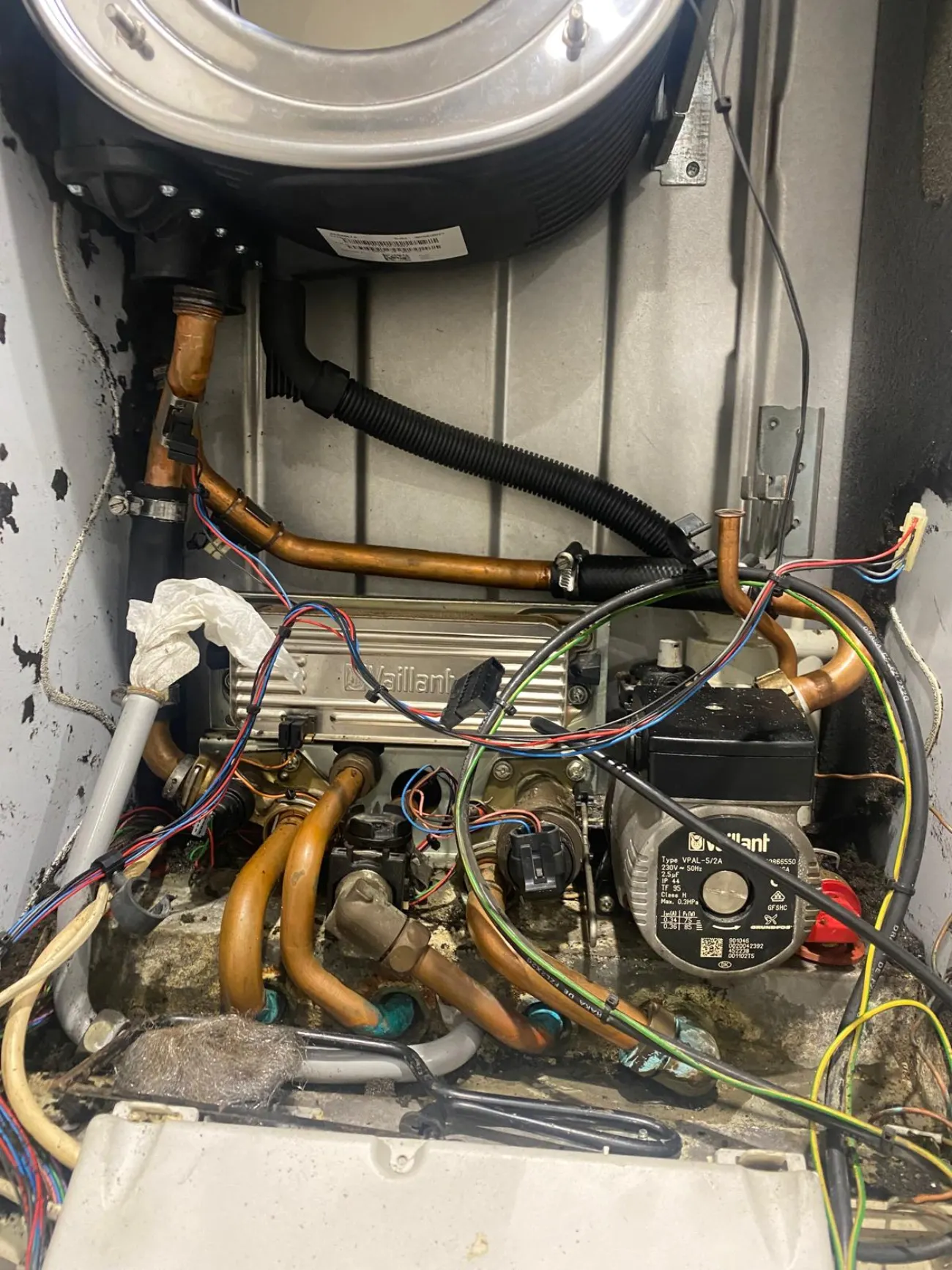
We had one on the bench this week: a Vaillant combi with the limescale-and-soot signature of a heat exchanger that had been quietly losing efficiency for a while. Carlton logged the job in one line - "strip down and replace new heat exchanger, Vaillant combination" - which is about as plain as it gets. Below is what that actually looks like once the casing comes off, photographed as he did it rather than a stock shot of a shiny new part.
What a heat exchanger does and why it fails
The heat exchanger is the part of the boiler that does the actual heating. Gas burns underneath it, and the exchanger passes that heat into the water running to your radiators and taps, without letting flame and water touch. On a Vaillant combi it sits at the top of the sealed combustion chamber, in a finned aluminium or copper stack the burner sits directly below. Every litre of water the boiler heats runs through it, which is why it takes the worst of any limescale or sludge in the system and why, given enough years, it is one of the parts most likely to need replacing.
Signs your heat exchanger is on the way out
- ◆Banging or kettling noises from the boiler - limescale narrowing the waterways inside the exchanger
- ◆Heating or hot water that used to be reliable now cuts out, or takes longer to warm up than it used to
- ◆A yellow, lazy flame instead of a crisp blue one where you can see the burner, a sign of poor combustion often sitting downstream of a partly blocked exchanger
- ◆Soot or black staining around the casing or the front panel
- ◆Rising gas bills for the same amount of heat, because a scaled exchanger transfers heat less efficiently and the boiler runs longer to compensate
- ◆A fault code linked to overheat or flow - on Vaillant boilers this commonly shows as an F.2x or F.7x series code
Inside a real Vaillant heat exchanger replacement
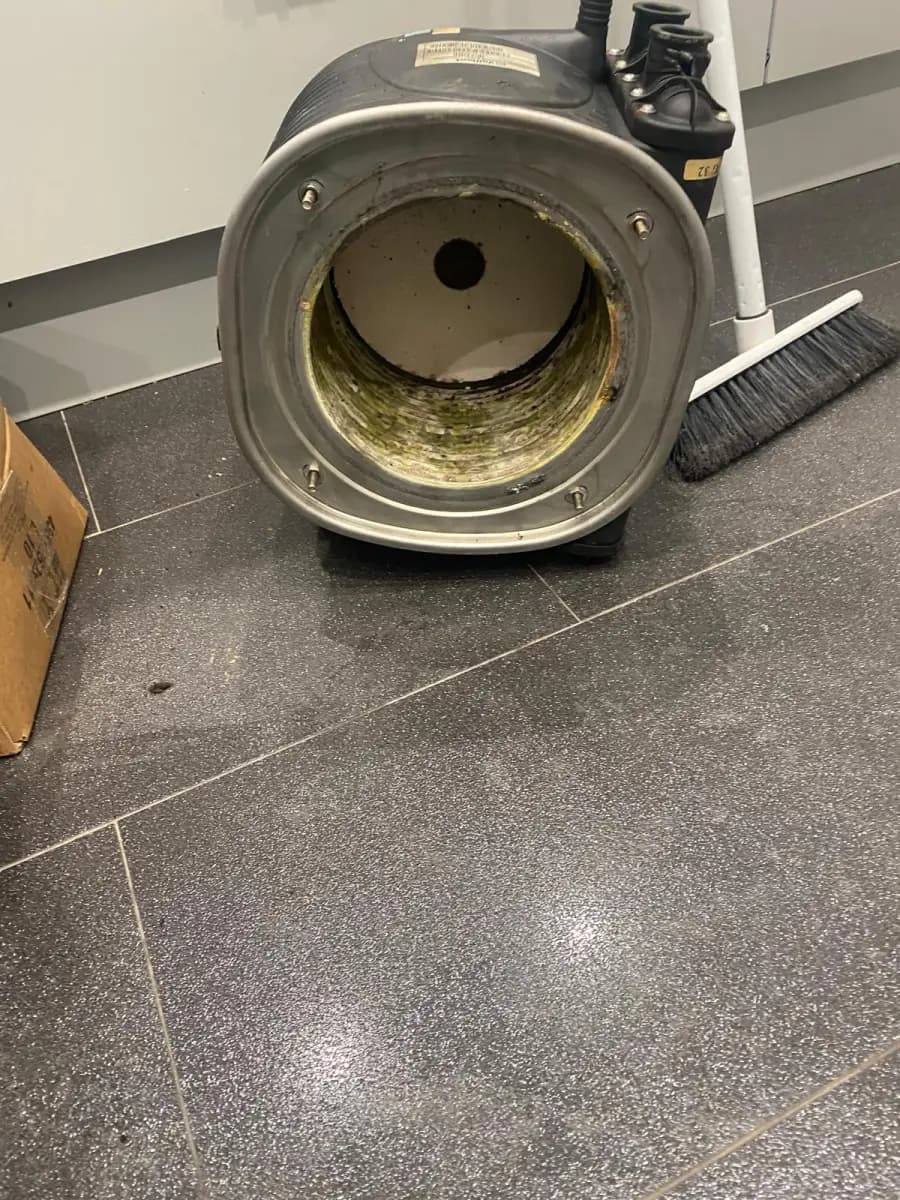
Once the front cover and the burner assembly are out of the way, the exchanger itself unbolts from a mounting plate at the top of the casing. This one came out caked in yellow-green limescale and flue deposit on the inside, the kind of build-up that takes years of hard water and normal use to form rather than a single fault.
With the old part out, the flue housing and burner chamber get cleaned down before the new heat exchanger goes in. This is the point in the job where deposits that have been sitting against the casing for years finally come off, and it is worth doing properly - fitting a clean new part against a dirty housing just starts the same build-up again sooner.
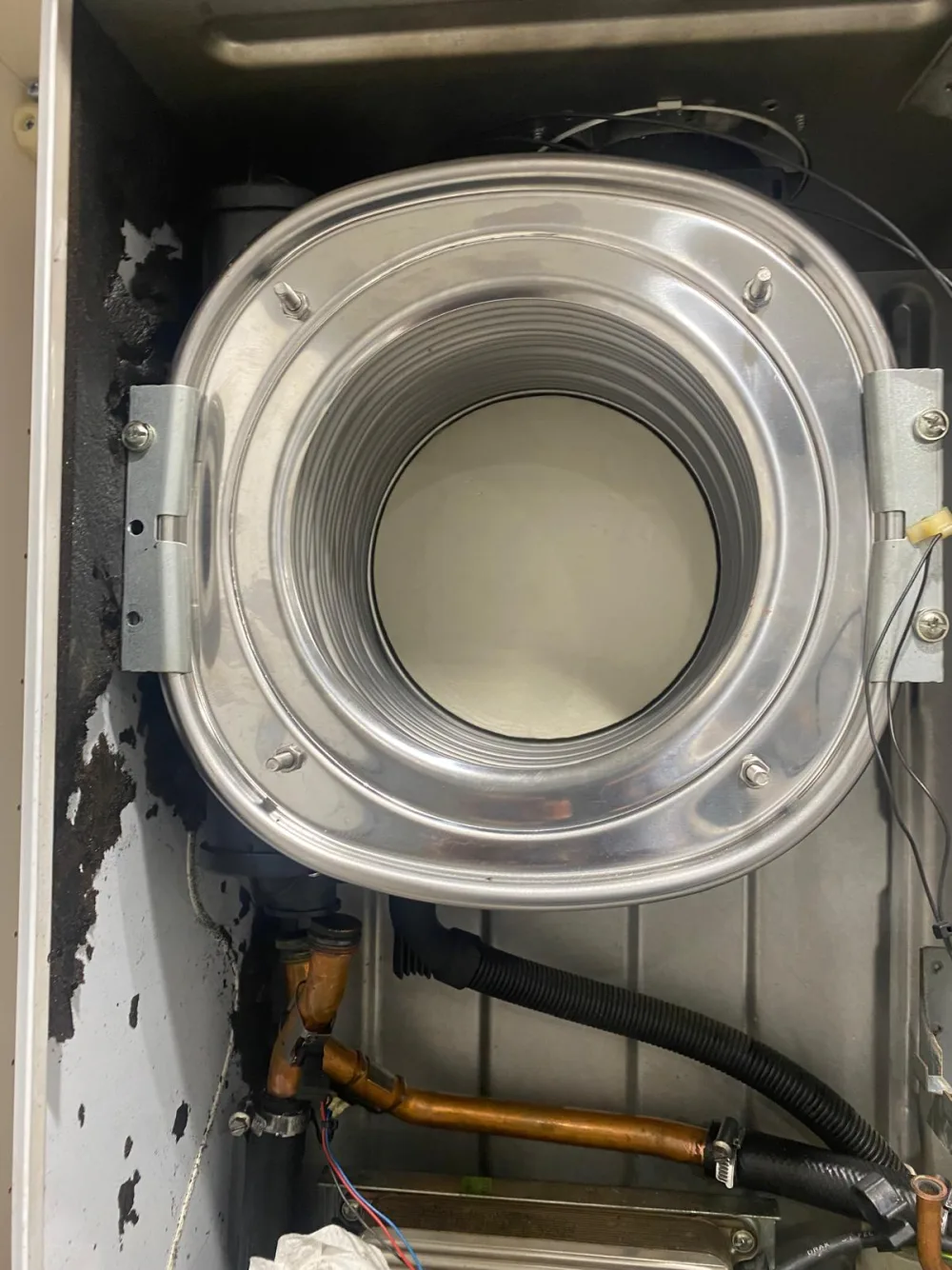
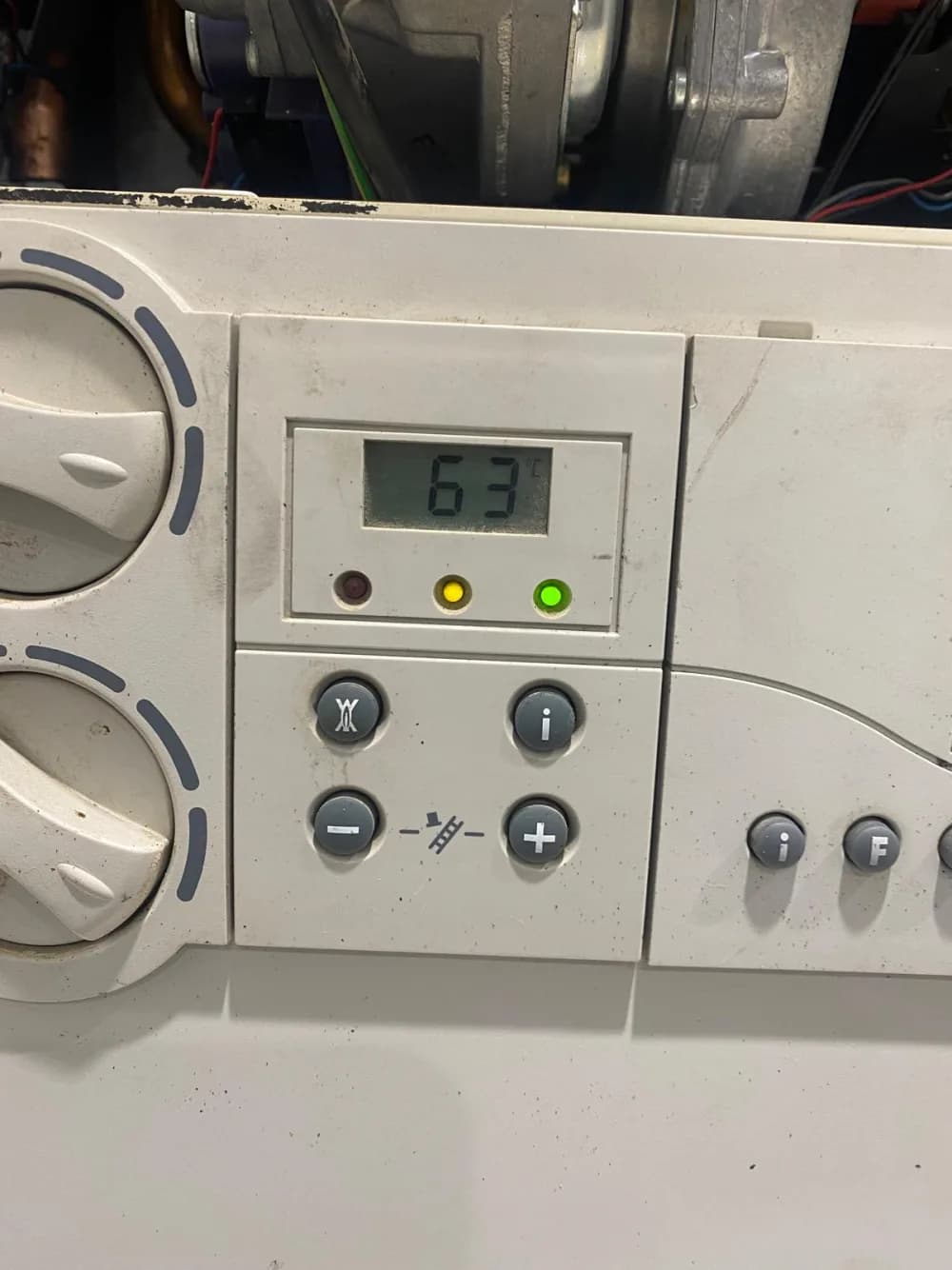
The new exchanger bolts back onto the same mounting points, and every copper joint it connects to - flow, return and the connections through to the burner and pump - gets reformed and reconnected by hand, along with the wiring loom for the sensors that sit around it. Every job like this gets a full check afterwards: a gas tightness test, flue gas readings and a function test on both heating and hot water, before we call it finished.
Vaillant heat exchanger replacement cost, in full
| Item | Typical UK cost | Notes |
|---|---|---|
| Primary heat exchanger (aluminium block, modern combi) | £250 to £450 | Price depends on the boiler model and how easily the part is stocked |
| Labour (half to a full day) | £150 to £300 | The casing, burner and fan usually have to come out first |
| Typical total, fitted | £450 to £750 | Always get this confirmed as a fixed price before work starts |
| For comparison: a new boiler installation | £2,000 to £4,000 | Worth weighing up against repair on a boiler over 12 to 15 years old |
One honest point from thirty years of doing this: a heat exchanger replacement is one of the more expensive single repairs a combi boiler needs, because so much has to come apart to reach it. On a boiler under ten years old that has otherwise been reliable, it is nearly always worth doing. On a boiler already past 12 to 15 years, a £600 repair is worth weighing against a new boiler installation, which comes with a fresh warranty and better efficiency from day one.
Repair or replace the boiler - how to decide
- ◆Boiler under 10 years old, this is its first major repair - fix the exchanger and keep the boiler
- ◆Boiler over 12 to 15 years old, or this is its second significant repair in two years - price a replacement boiler alongside the repair quote
- ◆Parts hard to source for an older or discontinued model - a sign to replace rather than wait on a part
- ◆Warranty already expired and other components are also showing their age - factor the cost of further repairs into the decision, not just this one
Why this is Gas Safe engineer only work
The heat exchanger sits inside the sealed combustion chamber, and reaching it means breaking that seal. Under the Gas Safety (Installation and Use) Regulations 1998 it is illegal for anyone who is not competent and registered to work on a gas appliance, and this repair is squarely inside that rule. The Gas Safe Register is the official list of engineers legally allowed to do this work in the UK, and the Health and Safety Executive's domestic gas guidance sets out why: a poorly reassembled combustion chamber risks gas leaks and carbon monoxide, not just a boiler that stops working.
Ask to see an engineer's Gas Safe ID card before they start. All three of us at CAF Heating (Carlton, Simon and Stephen) are Gas Safe registered, and you can check any engineer's registration on the Gas Safe Register website before they touch your boiler.
CAF Heating is also a Vaillant Approved Installer, which means Vaillant has assessed our training and installation standard directly, not just our Gas Safe registration. On a Vaillant-specific repair like this one, that matters for getting the right part first time and reassembling the boiler to the manufacturer's own spec.
Vaillant boiler making a banging or kettling noise, or running up higher gas bills than it should? Get a fixed price on a heat exchanger repair before it fails completely.
Request a callbackFrequently asked
How much does a Vaillant heat exchanger replacement cost?
Typically £450 to £750 including parts and labour, with the exchanger itself usually £250 to £450 and labour £150 to £300 for a half to full day's work. The exact price depends on the boiler model and how easily the part is stocked. Always get a fixed price confirmed before work starts rather than an estimate.
How long does a heat exchanger replacement take?
Most take half a day to a full day. The casing, burner assembly and fan usually have to come out before the engineer can reach the exchanger, and everything then has to be reconnected and tested, including a gas tightness check and flue gas readings, before the boiler is signed off as safe to use.
Can a heat exchanger be repaired instead of replaced?
In most cases no. A heat exchanger is a sealed unit, and once limescale, corrosion or a crack has affected it, cleaning rarely restores it fully or safely. Replacement is the standard fix. The better lever against future failure is an annual boiler service, which catches early scale build-up before it damages the exchanger.
What causes a heat exchanger to fail?
Mainly limescale and sludge build-up over years of normal use, worse in hard water areas without a scale reducer, plus general age and thousands of heating cycles. A poorly maintained boiler that has skipped services is far more likely to need this repair earlier than one serviced annually.
Is a faulty heat exchanger dangerous?
It can be. A cracked heat exchanger can let combustion gases including carbon monoxide leak into the airflow, which is why any suspected fault needs a Gas Safe registered engineer rather than DIY. Fit a working carbon monoxide alarm near the boiler regardless, and if it ever sounds, leave the property and call the National Gas Emergency Service on 0800 111 999.
Related guides
Need a Gas Safe engineer?
Call 07956 876156 or request a callback - we cover South London and Surrey.